
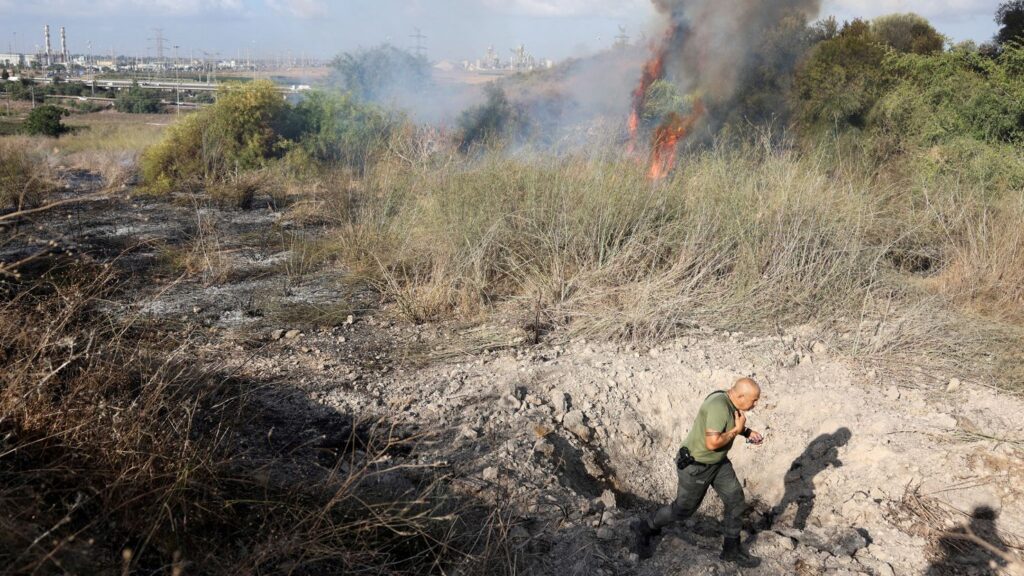

Israeli Prime Minister Benjamin Netanyahu issued a stern warning to Yemen’s Houthi rebels, stating they will pay a “heavy price” after a missile launched from Yemen struck central Israel. The attack, which represents an alarming escalation in the ongoing regional tensions, is believed to be part of a broader wave of missile and drone strikes launched by the Iranian-backed Houthis amidst the ongoing conflict between Israel and Hamas.
The Attack and Immediate Response
The missile, reportedly fired from Houthi-controlled territory in Yemen, landed in an open area in central Israel, causing damage but no casualties. This marks the furthest reach of the Houthis’ missile capabilities into Israeli territory, signaling a potential new front in the volatile Middle Eastern conflict. Israeli air defense systems, including the Iron Dome, were activated in response to the missile barrage, intercepting some projectiles but failing to stop this particular strike.
Prime Minister Netanyahu swiftly condemned the attack, vowing that Israel would retaliate with decisive force against those responsible. “Those who attempt to harm us from afar will pay a heavy price,” Netanyahu said in a statement. “We will hold the Houthi terrorists accountable, and we will respond at a time and place of our choosing.” His comments reflect Israel’s determination to protect its territory from any external threats, especially as it continues to engage in a heated conflict with Hamas in Gaza.
Houthis Join Regional Actors in Escalating Tensions
The Houthis, a Shiite rebel group backed by Iran, have long been involved in the civil war in Yemen but have recently expressed solidarity with Hamas and other anti-Israel actors in the region. In a televised statement following the missile strike, Houthi leaders said their actions were in response to Israel’s military campaign in Gaza, which has escalated since the October 7 Hamas attack that left hundreds of Israelis dead.
This missile strike represents the Houthis’ most direct involvement in the broader Israel-Hamas conflict, aligning them with other Iranian-backed groups like Hezbollah in Lebanon, which has also launched rocket and missile attacks against Israel in recent weeks. Iran, a key supporter of the Houthis, has used its network of regional allies to exert pressure on Israel, potentially opening multiple fronts against the country as the Gaza conflict intensifies.
Israel’s Regional Security Dilemma
The missile strike from Yemen complicates an already volatile security situation for Israel. In recent weeks, Israel has been primarily focused on its military campaign against Hamas in Gaza, while also preparing for potential attacks from Hezbollah in the north. Now, with the Houthis directly targeting Israeli cities, Netanyahu’s government faces the challenge of managing threats from multiple directions across the region.
Israel’s military is likely to respond to the Houthi strike with airstrikes on Houthi targets in Yemen, as it has done in response to previous missile and drone attacks launched from outside Gaza. However, an escalation in Yemen could further destabilize the region, drawing Israel deeper into the complex web of conflicts involving Iran and its proxy forces across the Middle East.
In the wake of the missile strike, Netanyahu’s government has reiterated its calls for strong international support, particularly from the United States, as it confronts the growing threats from Iran and its allied militias. Israeli Defense Minister Yoav Gallant warned that the country is facing a “multi-front war” and that it would need to leverage its alliances to maintain stability and security.
International Reactions and Concerns
The missile strike has raised alarm across the international community, with many fearing that the Israel-Hamas war could spread across the region, drawing in other actors like the Houthis, Hezbollah, and even Iran. The United States has already increased its military mpo4 slot presence in the Middle East, deploying additional warships and missile defense systems to protect its interests and allies in the region.
The Biden administration condemned the Houthi missile attack and reaffirmed its commitment to Israel’s security. U.S. officials have called on Iran to use its influence over the Houthis and other militias to prevent further escalation, warning that the broader conflict could spiral out of control if not contained.
European leaders have also expressed concern about the growing instability in the region, with calls for de-escalation and renewed efforts to broker peace. However, as the conflict spreads beyond Gaza’s borders, the prospects for diplomacy seem increasingly tenuous.
The Broader Impact of Houthi Involvement
The Houthis’ missile strike against Israel marks a significant shift in the dynamics of the conflict, as it brings the war into the larger context of Iran’s proxy network. The Houthis have previously targeted Saudi Arabia and the United Arab Emirates in their long-running war in Yemen, but this is one of the first times they have taken direct action against Israel.
This development adds to the growing list of actors involved in the Israel-Hamas war, which now threatens to encompass multiple countries and militias across the Middle East. As the conflict escalates, the risk of a broader regional war looms large, particularly if Hezbollah and other Iranian-backed groups ramp up their activities.
For Israel, the Houthis’ involvement is yet another reminder of the complexity of its security landscape and the challenges it faces in defending itself against an array of threats. Netanyahu’s vow to retaliate against the Houthis signals that Israel is prepared to take action to neutralize these emerging threats, even as it remains deeply engaged in the ongoing conflict with Hamas in Gaza.
Conclusion
As tensions in the Middle East continue to rise, the missile strike from Yemen’s Houthi rebels underscores the broader regional implications of the Israel-Hamas war. Prime Minister Netanyahu’s warning that the Houthis will pay a “heavy price” indicates that Israel is ready to respond forcefully to this new threat, even as it contends with escalating violence on multiple fronts. The growing involvement of Iran-backed militias like the Houthis raises concerns about a wider regional conflict, as Israel navigates an increasingly complex security environment.


