
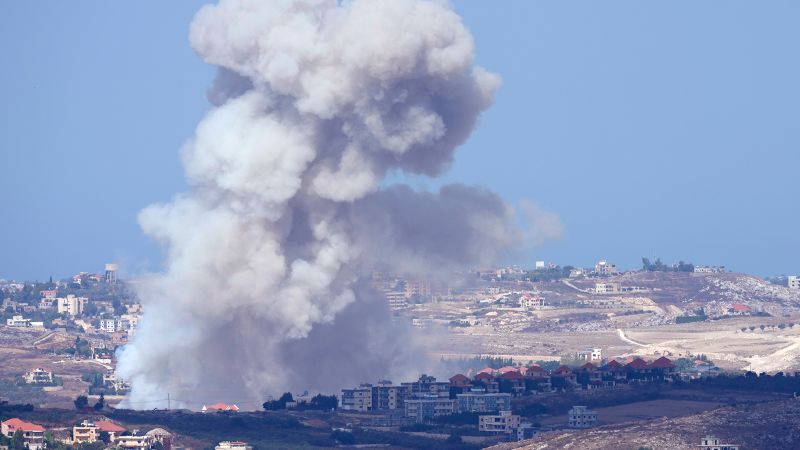

Tensions between Israel and Hezbollah escalated dramatically as the two sides traded strikes in one of the most intense flare-ups since the 2006 Lebanon War. The exchange of fire comes after Lebanon experienced its deadliest day in nearly two decades, leaving the region on edge and raising concerns about a potential broader conflict.
The Deadliest Day Since 2006
The latest violence marks a grim milestone for Lebanon, which is still reeling from the aftermath of the conflict that devastated the country in 2006. On the most recent day of fighting, dozens of casualties were reported, with the death toll in Lebanon reaching levels not seen in years. Civilians have been caught in the crossfire, and the humanitarian toll is mounting as communities near the border face displacement and destruction.
The situation began when Hezbollah, the powerful Shiite militant group based in Lebanon, launched a series of rocket attacks on northern Israel, citing retaliation for Israeli airstrikes earlier in the week. Israel responded with heavy artillery and airstrikes, targeting Hezbollah positions along the Lebanon-Israel border.
The Exchange of Strikes
The Israeli Defense Forces (IDF) launched a series of strikes aimed at Hezbollah military installations, communication sites, and suspected weapons caches. Israeli officials have emphasized that their actions are in response to Hezbollah’s rocket attacks, which targeted civilian areas in northern Israel. The IDF reported that their strikes successfully neutralized several of Hezbollah’s military capabilities, but the situation remains fluid as tensions continue to escalate.
Hezbollah, for its part, has vowed to continue its retaliation for what it sees as Israeli aggression. The group claimed responsibility for firing dozens of rockets and mortars into northern Israel, warning that further Israeli strikes would be met with an even stronger response. The tit-for-tat attacks have sparked fears that the conflict could spiral into a full-scale war, drawing in regional actors and inflaming an already fragile geopolitical situation in the Middle East.
Impact on Civilians
The escalation has had a devastating impact on civilians, particularly in Lebanon, where communities near the southern border have been caught in the crossfire. Local reports describe scenes of chaos, with residents fleeing their homes and seeking refuge in makeshift shelters as Israeli airstrikes and Hezbollah rocket attacks continue.
Lebanon, already grappling with a severe economic crisis and political instability, is now facing an additional humanitarian crisis as the fighting disrupts access to basic services like food, water, and medical care. Hospitals near the border are overwhelmed with the influx of casualties, and aid organizations are struggling to provide relief to the displaced.
In Israel, residents of northern towns have also been forced to seek shelter as rockets rain down. The Israeli government has deployed the Iron Dome missile defense system to intercept incoming rockets, but several have managed to land, causing damage to infrastructure and injuries to civilians.
Regional and Global Concerns
The international community is watching the developments with increasing concern, fearing that the conflict could destabilize the region further. Hezbollah is backed by Iran, and any prolonged confrontation with Israel could draw in other regional powers, including Syria, where Hezbollah operates with the support of President Bashar al-Assad’s regime.
The United Nations and several foreign governments have called for an immediate ceasefire, urging both sides to step back from the brink of war. UN peacekeepers stationed along the Lebanon-Israel border have been monitoring the situation closely but have so far been unable to prevent the exchange of fire.
Diplomatic efforts are underway to de-escalate the situation, with countries like the United States, France, and Russia engaging in behind-the-scenes negotiations with both Israel and Lebanon. However, the entrenched nature of the conflict, combined with the influence of external actors like Iran, complicates the path to peace.
A Fragile Balance
The trading of strikes between Israel and Hezbollah underscores the fragile balance in the region, where small provocations can rapidly escalate into large-scale conflict. Both sides have engaged in sporadic skirmishes in recent years, but the current escalation represents the most intense violence since the 2006 Lebanon War, which left over 1,200 Lebanese civilians and 165 Israelis dead.
The 2006 war ended in a UN-brokered ceasefire, but tensions between Israel and Hezbollah have remained high ever since, with periodic flare-ups along the border. The recent violence has raised fears that the situation could escalate into another full-scale war, which would have catastrophic consequences for Lebanon, already dealing with economic collapse and political turmoil, as well as for Israel and the broader region.
The Path Forward
As both sides brace for the possibility of further escalation, the international community is calling for restraint and dialogue. However, with Hezbollah’s deep ties to Iran and its firm stance against Israeli military actions, and with Israel determined to defend its territory against rocket attacks, finding a lasting solution may prove difficult.
The latest round of violence is a stark reminder of the unresolved nature of the Israel-Hezbollah conflict and the broader geopolitical tensions that continue to shape the Middle East. For now, Lebanon remains in mourning, with the deadliest day since 2006 casting a long shadow over the country’s future as it struggles to recover from its many crises.
As the situation unfolds, the hope remains that cooler heads will prevail and prevent further bloodshed in a region already scarred by decades of conflict.


