
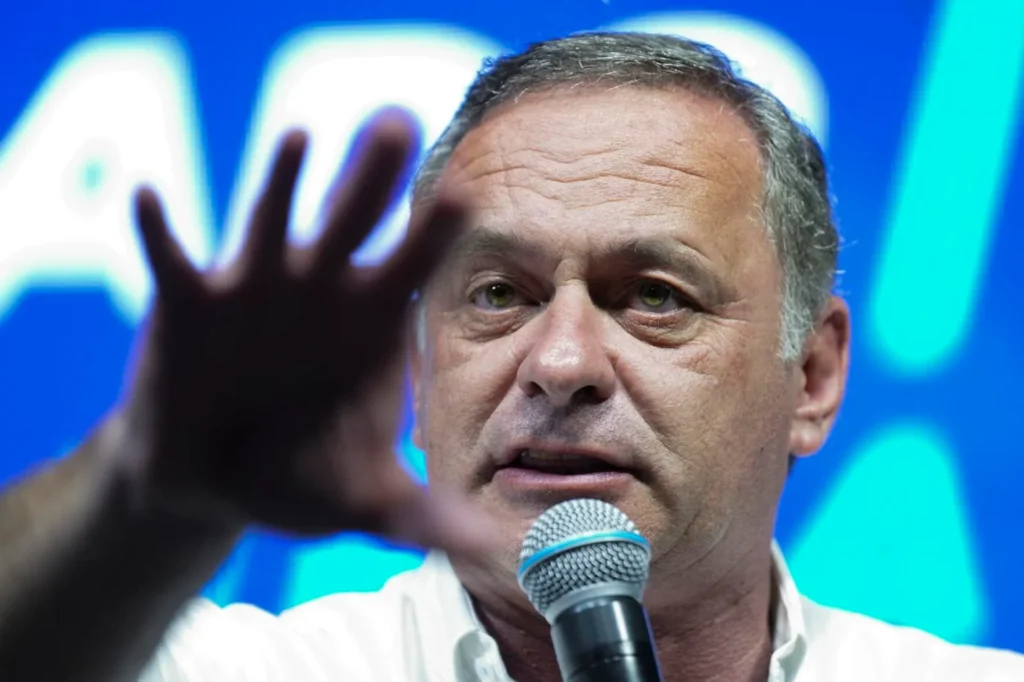

As Uruguay prepares for its upcoming national election, the political landscape is growing increasingly complex, with conservative forces rallying behind a dark horse candidate who could play the role of kingmaker in determining the country’s future leadership. While the traditional parties—the ruling left-wing Broad Front (Frente Amplio) and the center-right National Party (Partido Nacional)—remain dominant players, it is an unexpected contender who is stirring the most political intrigue.
The Rise of the Dark Horse Kingmaker
The candidate at the center of this attention is Guido Manini Ríos, a former army general and leader of the right-wing party Cabildo Abierto. Despite being relatively new to the political scene, Manini Ríos has gained significant traction in recent years, appealing to conservative voters dissatisfied with both the current government and the more established right-wing parties.
Manini Ríos’ rise as a political force has surprised many observers, not least because of his military background in a country that prides itself on democratic traditions and civilian control over the armed forces. His party, Cabildo Abierto, founded in 2019, espouses a blend of nationalism, conservatism, and economic reform, which has resonated with a significant portion of the electorate.
Though Cabildo Abierto is not expected to win the presidency outright, Manini Ríos could hold the balance of power in what is shaping up to be a closely contested election. If neither of the major parties secures a majority, Cabildo Abierto’s support could prove crucial in forming a governing coalition, making Manini Ríos a potential kingmaker.
Conservatives Look to Build a Coalition
Uruguay’s National Party, led by Luis Lacalle Pou, has traditionally been the primary voice for the center-right. However, the party faces stiff competition from the ruling left-wing Broad Front, which has been in power for most of the past two decades. As a result, conservatives are looking for ways to strengthen their chances of winning back the presidency and reversing many of the progressive policies introduced under the Broad Front government.
This is where Manini Ríos and Cabildo Abierto come into play. With a growing voter base of disillusioned conservatives and right-leaning centrists, Cabildo Abierto could provide the National Party with the additional support it needs to challenge the Broad Front in a second-round runoff. Many believe that a strategic alliance between the two parties could be the key to conservative victory.
Manini Ríos, however, has positioned himself as an independent force, critical of both the left and the traditional right. He has been vocal about the need for tougher security measures, stricter immigration policies, and economic reforms aimed at reducing public spending and promoting private sector growth. These positions have helped him carve out a distinct space in Uruguay’s political spectrum, and his popularity suggests that he could wield significant influence over the country’s future direction.
A Challenge to the Broad Front
The ruling Broad Front, led by former President Tabaré Vázquez and current President Luis Lacalle Pou, has overseen significant economic and social reforms during its time in power, including the legalization of same-sex marriage, the decriminalization of abortion, and progressive drug policies such as the legalization of marijuana. However, the party has also faced criticism over issues such as rising crime rates, economic stagnation, and government corruption.
The Broad Front’s candidate for the presidency is expected to face a tough challenge from the right, particularly if Manini Ríos and Cabildo Abierto throw their weight behind the National Party. Recent polls indicate that public dissatisfaction with the government’s handling of the economy and security concerns has opened the door for a stronger conservative challenge than in previous elections.
Manini Ríos has been particularly critical of the Broad Front’s security policies, accusing the government of being too lenient on crime and allowing social unrest to fester. His party’s platform calls for increased police presence, stricter penalties for violent crimes, and more robust border controls—positions that resonate with voters concerned about law and order.
The Risks of Coalition-Building
While Manini Ríos could be key to securing a conservative victory, there are risks associated with his potential role as kingmaker. His party’s hardline positions on security and immigration, as well as his military background, have raised concerns among some voters who fear a shift toward authoritarianism. Additionally, Cabildo Abierto’s populist rhetoric and anti-establishment stance could alienate centrist voters who are wary of more radical policies.
Moreover, forging a coalition between Cabildo Abierto and the National Party is not guaranteed. Manini Ríos has made it clear that he will not simply fall in line with the traditional conservative platform, and any alliance would likely involve compromises on key issues. For example, while both parties agree on the need for economic reform, there are differences in their approaches to social policy and governance.
Still, the potential for a coalition remains a strong possibility, particularly if the election results are close and the conservative bloc needs additional support to defeat the Broad Front.
Conclusion: A Political Gamble
As Uruguay heads toward its next election, the rise of Guido Manini Ríos and Cabildo Abierto has added a layer of unpredictability to the political landscape. With conservatives pinning their hopes on this dark horse candidate, the election could hinge on whether Manini Ríos is willing to play the role of kingmaker and what compromises he might demand in return.
For the National Party, allying with Manini Ríos offers the chance to unseat the Broad Front and enact conservative reforms. But it also represents a political gamble, as any coalition would have to balance the demands of Cabildo Abierto’s more radical base with the need to appeal to mainstream voters.
Regardless of the outcome, Manini Ríos’ influence is likely to be felt in Uruguay’s political future, signaling a shift in the country’s traditional two-party dynamics and offering a new voice for the growing number of voters seeking change.
