
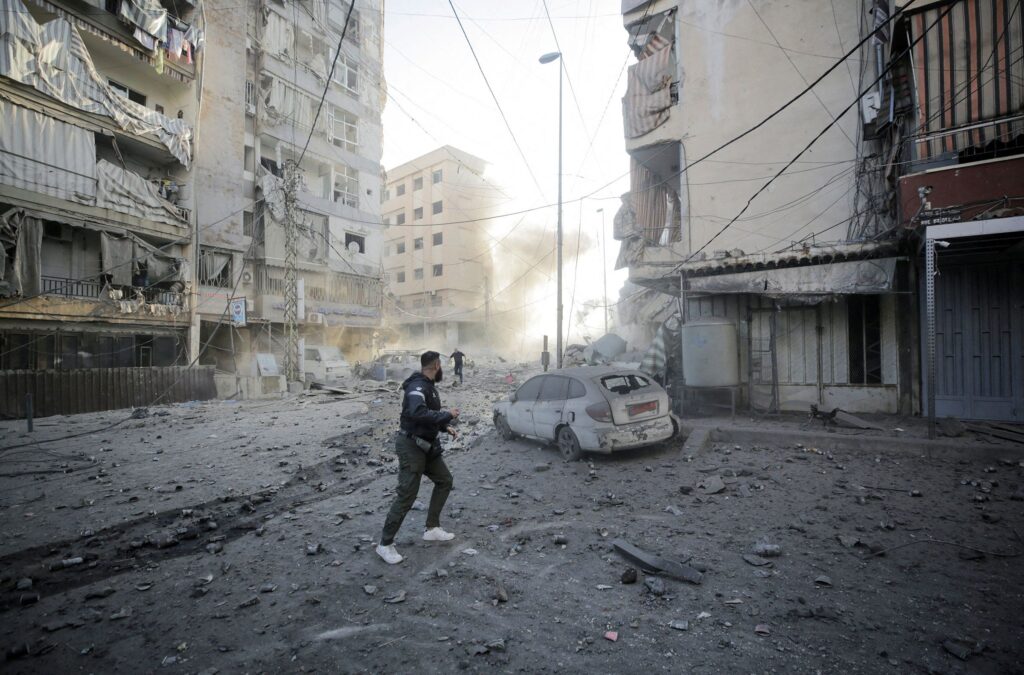

Israel has expanded its ground offensive in southern Lebanon, intensifying its military operations against Hezbollah militants as tensions in the region continue to escalate. The move follows weeks of border skirmishes between Israeli forces and Hezbollah, a powerful Shiite militant group backed by Iran, which has heightened fears of a broader regional conflict.
The expanded offensive is part of Israel’s broader strategy to weaken Hezbollah’s military capabilities and prevent further rocket attacks and cross-border incursions. As Israeli ground forces push deeper into Lebanese territory, there are growing concerns over the potential for a prolonged and destructive conflict, with serious humanitarian consequences for civilians caught in the crossfire.
The Escalation of Violence
The latest round of hostilities between Israel and Hezbollah erupted following increased rocket fire from southern Lebanon into northern Israel. In response, the Israeli Defense Forces (IDF) launched a series of airstrikes targeting Hezbollah positions, infrastructure, and weapons caches in Lebanon. While this exchange initially mirrored past skirmishes, the situation escalated dramatically as Hezbollah increased its attacks and Israel launched a more aggressive ground campaign.
In recent days, Israel has ramped up its offensive, sending ground troops into southern Lebanon to dismantle Hezbollah’s network of tunnels, rocket launchers, and military outposts. This marks the largest military operation in the region since the 2006 Israel-Hezbollah war, which saw heavy casualties on both sides and widespread destruction in Lebanon.
Israel’s Objectives
Israel’s stated objectives are twofold: to neutralize Hezbollah’s military threat and to create a buffer zone along the Lebanese border that would prevent future attacks. Hezbollah, which is classified as a terrorist organization by Israel, the United States, and several other nations, has amassed a significant arsenal of rockets and missiles over the years, many of which are capable of striking deep into Israeli territory.
The IDF has focused its ground operations on Hezbollah’s military infrastructure, aiming to weaken its ability to launch long-range rockets into Israeli cities. The offensive has also targeted supply lines and command centers that link Hezbollah to its Iranian backers, as well as fortified positions along the southern border.
While Israeli officials have emphasized that the offensive is limited to military objectives, they have also warned that the scope of the operation could expand if Hezbollah continues its attacks. Prime Minister Benjamin Netanyahu has reiterated Israel’s right to defend itself and has called on the international community to condemn Hezbollah’s aggression.
Hezbollah’s Response
Hezbollah has responded defiantly to Israel’s ground offensive, launching more rocket attacks and warning of further retaliation. The group’s leader, Hassan Nasrallah, has vowed to continue the fight, framing the conflict as part of a broader struggle against Israeli occupation and influence in the region. Nasrallah has also accused Israel of targeting civilian infrastructure and warned that Hezbollah’s retaliation could expand to other fronts, potentially involving Syria and even direct Iranian intervention.
In addition to the rocket fire, Hezbollah fighters have engaged Israeli forces in direct combat along the border, using guerrilla tactics and ambushes to slow the IDF’s advance. The militant group, which operates with significant support from Iran’s Islamic Revolutionary Guard Corps (IRGC), has extensive experience in asymmetrical warfare, making the ground campaign particularly challenging for Israeli forces.
Regional and International Reactions
The escalation of violence in Lebanon has raised alarms across the Middle East and beyond. Neighboring countries, particularly Lebanon and Syria, are on high alert as they monitor the growing conflict. Lebanon, still recovering from a prolonged economic and political crisis, faces the risk of further destabilization as Israeli airstrikes and ground operations continue. Many Lebanese civilians have been displaced by the fighting, raising fears of a humanitarian crisis in southern Lebanon.
Iran has strongly condemned Israel’s offensive and reaffirmed its support for Hezbollah, warning that continued aggression could lead to a wider war. Tehran has also hinted at possible involvement through its proxy forces in Iraq, Syria, and Yemen, signaling the potential for a broader regional conflict if the situation continues to deteriorate.
Internationally, world leaders have called for restraint and urged both sides to de-escalate the conflict. The United Nations and the European Union have expressed concern over the potential for large-scale civilian casualties, while the United States has backed Israel’s right to self-defense but encouraged diplomacy to prevent further escalation.
Humanitarian Concerns
As the ground offensive intensifies, concerns about the impact on civilians in southern Lebanon are growing. The region has already experienced significant displacement, with thousands of Lebanese residents fleeing the areas affected by Israeli airstrikes and military operations. Humanitarian organizations have warned of a worsening crisis as access to food, medical supplies, and clean water becomes increasingly limited.
Lebanon, which has been grappling with its own political turmoil and economic collapse, is ill-equipped to handle a new influx of refugees or deal with the destruction of key infrastructure. Aid groups are calling for an immediate ceasefire to allow humanitarian aid to reach those in need and to prevent further loss of life.
The Potential for a Wider Conflict
The expanding Israeli ground offensive in Lebanon raises the specter of a larger regional conflict, particularly given Hezbollah’s ties to Iran and the broader geopolitical tensions in the Middle East. Israel’s actions in Lebanon are closely watched by other actors in the region, including Syria, Iraq, and Iran, all of which could potentially become involved if the situation escalates further.
The conflict also complicates Israel’s already tense relationships with other neighboring countries, including Syria, where Israeli airstrikes have targeted Iranian forces and Hezbollah positions in recent years. With multiple fronts of potential engagement, the situation in Lebanon could quickly spiral into a larger regional war if diplomatic efforts to contain the violence fail.
Conclusion
Israel’s expanded ground offensive in Lebanon marks a significant escalation in its ongoing conflict with Hezbollah, with the potential for a prolonged and destructive confrontation. As Israeli forces push deeper into Lebanese territory and Hezbollah intensifies its retaliatory attacks, the risk of a broader regional conflict looms large. International efforts to mediate and prevent further escalation will be crucial in determining whether this latest round of violence can be contained or whether the Middle East will face another prolonged and devastating war.


