
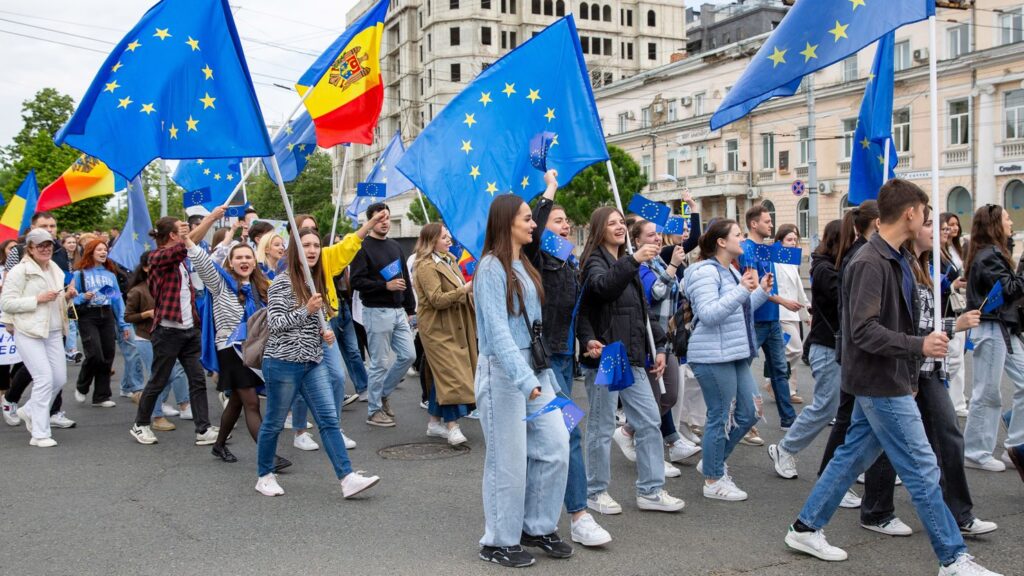

Moldova, a small but strategically important country in Eastern Europe, is once again at the center of a geopolitical struggle between Russia and the West as it prepares for two crucial votes. With a history of political instability, ethnic divisions, and external influence, Moldova’s future direction will be shaped by upcoming elections that could determine whether the nation continues its push toward European integration or shifts back under Russia’s sphere of influence.
Moldova’s Geopolitical Crossroads
Located between Romania and Ukraine, Moldova has long been a contested space for influence between Russia and the West. Following its independence from the Soviet Union in 1991, Moldova has struggled to find a stable political identity, often torn between pro-Russian and pro-European factions. The nation’s internal divisions are exacerbated by the breakaway region of Transnistria, a Russian-backed separatist enclave that has declared itself independent, though it is not recognized internationally.
Moldova’s current government, led by President Maia Sandu and her pro-European Party of Action and Solidarity (PAS), has made clear its intentions to move closer to the European Union (EU) and distance the country from Russian influence. This shift has been supported by many in Moldova’s urban centers and younger generations who see EU membership as a path toward economic growth, greater freedoms, and improved governance.
However, a significant portion of the population, particularly in rural areas and among the country’s Russian-speaking minority, remains wary of Western influence. They view Russia as a traditional ally and economic partner. The country’s reliance on Russian gas and energy, as well as historic ties dating back to the Soviet era, keep Russia’s influence strong.
Two Critical Votes on the Horizon
Moldova’s political future is now hanging in the balance as the country faces two pivotal votes: local elections and a referendum in the breakaway region of Gagauzia, both of which will offer a glimpse into the nation’s geopolitical orientation.
- Local Elections: Scheduled for November, these elections will determine control of key municipal governments across the country, including the capital, Chișinău. For President Sandu and her pro-Western government, winning in these elections would solidify their mandate to continue Moldova’s path toward EU integration. A strong showing by PAS would give Sandu more political leverage to implement reforms aimed at reducing corruption, increasing transparency, and aligning Moldova’s institutions with EU standards. However, the opposition, led by the pro-Russian Socialist Party and the populist Șor Party, is determined to make gains. They have capitalized on economic grievances, rising inflation, and discontent with the government’s handling of energy prices—issues that have been exacerbated by the war in neighboring Ukraine. If the opposition performs well, it could complicate Sandu’s efforts to maintain Moldova’s pro-Western trajectory and embolden pro-Russian forces to push for closer ties with Moscow.
- The Gagauzia Referendum: The autonomous region of Gagauzia, located in the south of Moldova, is home to a Turkish-speaking minority with a history of pro-Russian sentiment. Gagauzia has been a hotbed of political tension, often opposing the central government’s pro-European policies. In December, Gagauzia is set to hold a referendum on expanding its autonomy, a move seen by many as a way to strengthen its ties with Russia. The referendum could have significant consequences for Moldova’s territorial integrity and political stability. If Gagauzia pushes for greater autonomy or even hints at the possibility of secession, it could embolden other separatist movements, such as the Russian-backed Transnistria region, further destabilizing Moldova. Russia has historically supported separatist movements in its neighboring countries as a means of maintaining influence and undermining pro-Western governments.
The Russia-Ukraine War’s Impact on Moldova
Moldova’s delicate position between Russia and the West has become even more precarious in the wake of Russia’s invasion of Ukraine in 2022. The war has heightened security concerns throughout the region, and Moldova, which shares a long border with Ukraine, has felt the ripple effects. The conflict has exacerbated Moldova’s energy crisis, as the country has traditionally depended on Russian gas, and it has brought the issue of Russian influence into sharper focus.
President Sandu’s government has worked closely with the EU and the United States to strengthen Moldova’s defenses, reduce its dependence on Russian energy, and align more closely with Western institutions. In June 2022, Moldova was granted EU candidate status, a significant step in its journey toward European integration. However, the war has also deepened internal divisions, as some Moldovans fear that closer ties with the West could provoke Russia into more aggressive actions, similar to what Ukraine has experienced.
Russia, for its part, continues to exert pressure on Moldova, using energy supplies and political influence as leverage. Russian state media frequently targets Moldovan audiences with anti-Western narratives, while Moscow has voiced support for pro-Russian parties and separatist movements within the country. The outcome of the upcoming votes could either strengthen Russia’s foothold in Moldova or push the country further into the Western camp.
The Stakes for Moldova’s Future
The stakes in Moldova’s upcoming elections and the Gagauzia referendum are incredibly high. For President Maia Sandu and her government, maintaining a pro-European majority in local governments would signal continued support for Moldova’s EU aspirations and strengthen her position in negotiations with European leaders. The government’s success could also accelerate key reforms needed to meet the conditions for full EU membership.
On the other hand, if pro-Russian forces gain ground in these votes, Moldova could find itself facing increased internal discord and pressure from Moscow to abandon its Western ambitions. A pro-Russian victory would likely complicate Moldova’s relationship with the EU and lead to greater instability as the country grapples with competing geopolitical influences.
As Moldova approaches these decisive moments, the country’s future hangs in the balance. Will it continue to look westward, aligning itself with the European Union and the values of democracy and transparency, or will it revert to its historic ties with Russia, a move that could lead to further division and uncertainty? The outcome of these votes will not only shape Moldova’s domestic politics but will also send ripples across Eastern Europe, as the tug of war between Russia and the West intensifies on Moldova’s doorstep.


