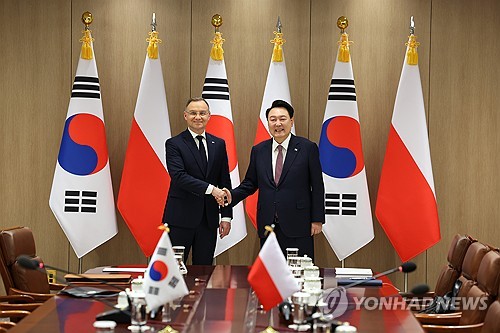

In a strong display of international solidarity, South Korean President Yoon Suk Yeol and Polish President Andrzej Duda jointly condemned North Korea for reportedly sending troops to Russia to support Moscow’s military operations. The two leaders, meeting during an international summit, expressed serious concerns about the implications of this development for regional security and global stability.
North Korea’s Reported Involvement
Reports have surfaced in recent weeks suggesting that North Korea has dispatched military personnel to aid Russia in its ongoing conflict in Ukraine. According to intelligence sources, North Korean troops may be providing logistical support or even taking part in combat alongside Russian forces. While the exact nature of North Korea’s involvement remains unclear, this alliance between Pyongyang and Moscow has drawn widespread condemnation from the international community.
President Yoon and President Duda voiced their outrage during a press conference, labeling North Korea’s actions as a direct violation of international norms. Yoon criticized Pyongyang for escalating tensions, not just on the Korean Peninsula but across the world, by engaging in such activities. Duda echoed these sentiments, noting that North Korea’s participation in Russia’s war effort further destabilizes the global order and raises serious concerns for Eastern Europe and Asia.
A Dangerous Precedent
North Korea’s military support for Russia marks a significant shift in the geopolitics surrounding the war in Ukraine. While Moscow has already received backing from countries like Belarus and Iran, Pyongyang’s involvement signals the increasing willingness of authoritarian regimes to cooperate militarily in defiance of international sanctions and diplomatic pressure.
For South Korea, this development is particularly troubling. President Yoon has worked to strengthen South Korea’s alliances with Western powers, including the United States and NATO members, in response to North Korea’s nuclear ambitions and growing ties with Russia and China. The potential presence of North Korean troops in Russia could signal deeper military cooperation between the two countries, threatening the fragile balance of power in East Asia.
For Poland, which shares a border with both Russia and Ukraine, the implications are equally serious. President Duda has been a staunch supporter of Ukraine, sending military aid and advocating for stronger European and NATO responses to Russian aggression. The prospect of North Korea joining forces with Russia raises fears of a broader international conflict involving multiple authoritarian states.
Strengthening International Cooperation
In response to the news, Yoon and Duda emphasized the need for stronger international cooperation to counter the growing axis of authoritarian regimes. Both leaders called for increased sanctions on North Korea and Russia, as well as heightened military preparedness in both Europe and Asia.
Yoon, in particular, has been working closely with the United States, Japan, and other regional allies to counter the North Korean threat. South Korea has also deepened its defense ties with NATO, viewing the conflict in Ukraine as interconnected with the security challenges facing East Asia. Duda, likewise, has been a vocal advocate for increased NATO support for Ukraine and stronger deterrence against Russian aggression in Eastern Europe.
The joint condemnation from Yoon and Duda sends a clear message that North Korea’s involvement in Russia’s war will not go unchallenged. Both leaders stressed the importance of maintaining a unified international front to isolate authoritarian regimes and uphold global security standards.
Broader Geopolitical Implications
North Korea’s apparent decision to send troops to Russia also highlights the evolving global alliances between authoritarian states, with Russia, North Korea, Iran, and China forming a loose bloc in opposition to the U.S.-led Western coalition. This growing cooperation between regimes that are under heavy international sanctions and diplomatic isolation represents a shift in global power dynamics.
For North Korea, supporting Russia offers an opportunity to strengthen its ties with a key ally while challenging the U.S. and its partners. North Korean leader Kim Jong-un has been increasingly reliant on Russia and China for economic and military support as international sanctions continue to choke Pyongyang’s economy. By aligning itself with Moscow, North Korea hopes to gain both strategic advantages and leverage over South Korea and its allies.
Russia, on the other hand, benefits from North Korean manpower and potentially even military expertise. As its war in Ukraine drags on, Moscow is seeking all possible means to bolster its military capabilities, especially as Western military aid to Ukraine continues to increase. By incorporating North Korean troops into its forces, Russia could be aiming to shore up its frontlines and shift the balance of power in its favor.
Conclusion
The condemnation from South Korea’s Yoon and Poland’s Duda of North Korea’s troop dispatch to Russia underscores the gravity of the situation and the potential for broader global conflict. With Pyongyang further entrenching itself in Russia’s war effort, the world faces a more complex and dangerous geopolitical landscape.
Yoon and Duda’s calls for greater international cooperation and tougher sanctions reflect a growing consensus among democratic nations that authoritarian regimes must be confronted and isolated to preserve global peace and security. As North Korea deepens its ties with Russia, the actions of the international community in the coming weeks will be crucial in determining the next phase of this increasingly globalized conflict.