
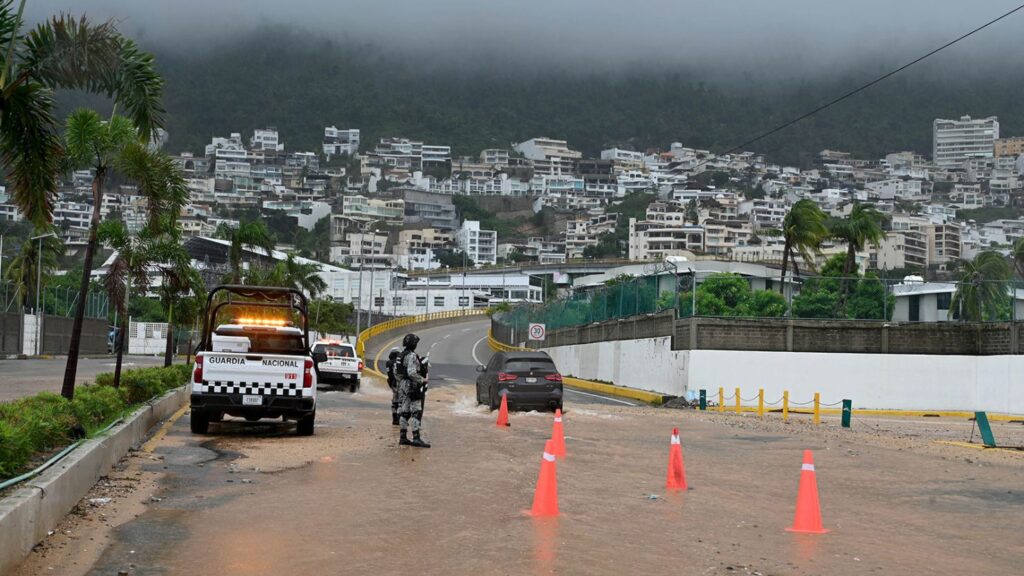

In an extraordinary turn of events, Hurricane John, which had weakened earlier this month, has regenerated into what meteorologists are calling a “zombie hurricane” in the Pacific Ocean. The revived storm has gained significant strength, bringing heavy rains and flooding to parts of Mexico’s southwestern coast. Experts are closely monitoring the storm’s unpredictable path as it threatens more communities with potentially dangerous conditions.
What is a Zombie Hurricane?
A “zombie hurricane” refers to a rare phenomenon where a storm, once weakened or dissipated, re-forms and intensifies into a hurricane again. This term has been used sparingly but gained more attention in recent years as climate change has contributed to more unpredictable storm patterns.
Hurricane John initially formed in the Pacific in early September, making its way westward and weakening significantly as it encountered cooler waters and wind shear. However, days after it was downgraded to a tropical depression, John regained strength over the warmer waters of the Pacific, a condition that fueled its rebirth into a hurricane. This rare resurgence has put coastal areas of Mexico, particularly in the southwestern region, on high alert.
Impact on Mexico’s Southwestern Coast
The revitalized hurricane brought torrential downpours, flash flooding, and high winds to states along Mexico’s southwestern coast, including Guerrero, Oaxaca, and Michoacán. In several areas, rivers have overflowed, streets have been submerged, and landslides have occurred, creating hazardous conditions for residents.
Acapulco, one of the most affected cities in the state of Guerrero, experienced widespread flooding as rivers swelled and spilled into neighborhoods, causing significant damage to homes and infrastructure. Emergency services have been working around the clock to rescue stranded residents and provide relief in areas hit hardest by the flooding. Schools and businesses have been closed, and authorities have urged residents in low-lying areas to evacuate as conditions worsen.
A Surge in Storm Strength
Meteorologists have been taken aback by how quickly John regained its power. The hurricane, which had initially weakened after crossing into cooler waters, rapidly intensified when it hit a patch of the Pacific Ocean with unusually warm sea surface temperatures—an effect linked to El Niño conditions.
According to the National Hurricane Center (NHC), John re-formed into a Category 1 hurricane but is expected to fluctuate in intensity over the next few days. It currently boasts sustained winds of up to 90 miles per hour (145 kilometers per hour), and meteorologists are closely monitoring whether it could strengthen further or finally dissipate.
The unpredictability of John’s resurgence has highlighted the changing dynamics of hurricane behavior in the Pacific, with storms lingering longer than they used to. Climate scientists point to rising sea surface temperatures and more erratic atmospheric conditions as contributing factors to the odd reformation of storms like John.
Warnings and Preparedness
As Hurricane John continues to move parallel to the southwestern coast of Mexico, officials have issued warnings for heavy rain, flooding, and dangerous sea conditions. Residents in the states of Guerrero, Oaxaca, and Michoacán have been advised to take precautionary measures, particularly those living in flood-prone areas.
Mexico’s National Civil Protection Coordination (CNPC) has dispatched emergency teams to high-risk regions and is coordinating relief efforts. Officials have established emergency shelters in areas that may be affected by further flooding, and military personnel have been deployed to assist in evacuation and rescue operations.
Meteorologists warn that even though John may not make direct landfall, the storm’s proximity to the coast could continue to cause life-threatening flooding and landslides in mountainous regions. “This storm may be unpredictable, but its effects are clear and dangerous,” said Carlos Valdés, a meteorologist with Mexico’s National Weather Service. “Residents need to be on high alert for flash flooding and mudslides in the coming days.”
The Role of Climate Change
The reformation of Hurricane John as a “zombie” storm has raised concerns among climate scientists, who have been tracking the increasing frequency of such events in recent years. Experts suggest that warming oceans, driven by global climate change, are making it easier for weakened storms to regain strength, particularly in regions like the Pacific where El Niño patterns exacerbate warm water conditions.
Dr. Alice Munn, a climate scientist at NOAA, explained, “Zombie hurricanes were once a rarity, but with sea surface temperatures rising, we are seeing more instances of storms that regenerate after being weakened or stalled. The warmer ocean waters essentially act as fuel, allowing storms to reorganize and intensify more quickly.”
While zombie storms are still relatively uncommon, their occurrence has sparked discussions about the need to adapt preparedness strategies to account for their growing frequency. The unpredictability of such storms makes it harder for communities to anticipate when they may need to take action, which can result in more dangerous situations.
Looking Ahead: The Future Path of Hurricane John
As of now, Hurricane John is projected to continue moving west-northwest, skirting the coastline of Mexico. While it is not expected to make landfall directly, heavy rains and flooding will likely persist in the southwestern parts of the country for several days.
Forecasters predict that John could either weaken again as it encounters cooler waters or potentially gather more strength depending on atmospheric conditions. The next few days will be critical in determining how the storm evolves, with meteorologists and emergency responders closely watching for any changes in its trajectory.
Meanwhile, residents in the affected areas are bracing for more rainfall, with several feet of water already reported in some regions. The ongoing flooding presents a serious risk, particularly in rural areas where infrastructure is less capable of withstanding the impact of such intense storms.
Conclusion
Hurricane John’s return as a “zombie hurricane” has underscored the growing challenges of predicting and managing natural disasters in a changing climate. While the storm’s resurgence is a rare event, it may become more common as global warming continues to affect weather patterns around the world.
For now, Mexico’s southwestern coast remains in the storm’s path, and the full extent of the damage is yet to be assessed. As rescue teams and meteorologists work to mitigate the storm’s impact, the “zombie” hurricane serves as a stark reminder of nature’s unpredictability in an era of climate change.