
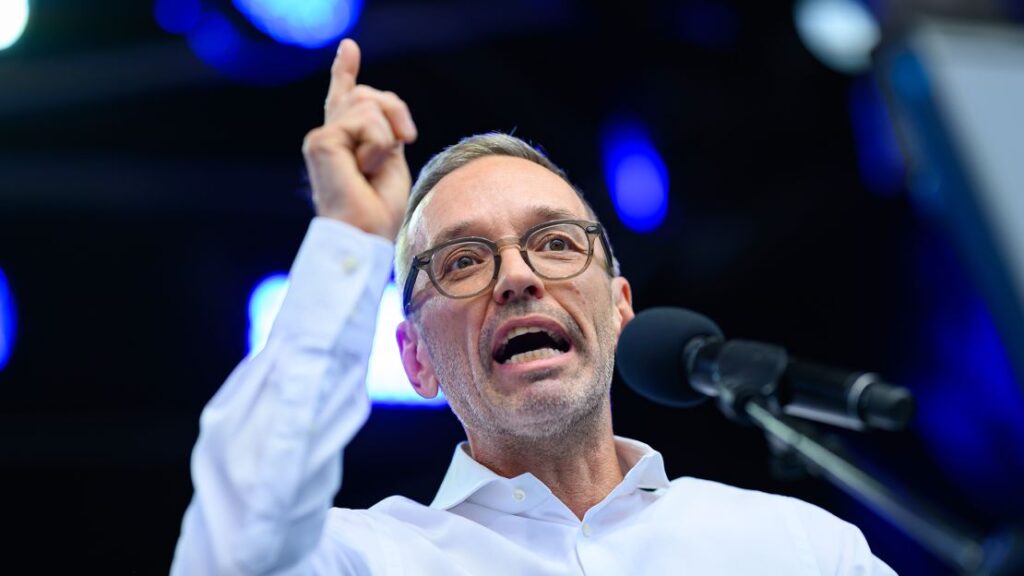

As Austria gears up for a pivotal election on Sunday, all eyes are on the far-right Freedom Party of Austria (FPÖ), which has emerged as the frontrunner. Once considered a fringe political force, the FPÖ has steadily grown in influence and popularity, positioning itself as a dominant player in the country’s political landscape. But how did a party with far-right, nationalist roots gain such traction in mainstream Austrian politics?
The FPÖ’s Rise to Power
The Freedom Party of Austria, founded in 1956, has long been known for its nationalist, anti-immigration stance and Euroskepticism. However, its modern surge began in the late 1980s under the leadership of Jörg Haider, who transformed the FPÖ from a marginal party into a major political force by capitalizing on growing disenchantment with traditional parties. Haider’s charismatic, populist rhetoric focused on nationalism, curbing immigration, and critiquing the European Union.
Despite Haider’s controversial statements about Nazism and immigrants, his message resonated with a segment of the Austrian population concerned about social changes, globalization, and the influx of immigrants in the 1990s. The FPÖ shocked the world in 2000 by entering into a coalition government, sparking international criticism and leading to temporary sanctions from the European Union.
The Strache Era and Decline
After a period of decline, the FPÖ regained strength under the leadership of Heinz-Christian Strache in the 2000s. Strache positioned the FPÖ as a defender of Austrian identity against what he described as the dangers of uncontrolled immigration and Islamization. His success culminated in 2017 when the FPÖ again entered a coalition government, this time with the conservative Austrian People’s Party (ÖVP) led by Sebastian Kurz.
However, the FPÖ’s fortunes took a major hit in 2019 when the Ibiza scandal broke. A video surfaced showing Strache offering political favors in exchange for financial support from a woman posing as the niece of a Russian oligarch. The scandal led to Strache’s resignation and the collapse of the coalition government. The FPÖ was subsequently relegated to opposition status in the 2019 elections, suffering significant losses.
Rebuilding and the Current Surge
Despite the fallout from the Ibiza scandal, the FPÖ has managed to stage a remarkable political comeback. Under the leadership of Herbert Kickl, a former interior minister and a hardliner within the party, the FPÖ has capitalized on a series of social and political shifts in Austria.
Kickl’s leadership has pushed the party even further to the right, emphasizing Austrian sovereignty, strict immigration control, and skepticism of international organizations like the EU. His response to the COVID-19 pandemic, where he positioned the FPÖ as a staunch opponent of lockdowns, mandatory vaccinations, and other public health measures, resonated with segments of the population who felt alienated or mistrustful of the government’s approach. This enabled the FPÖ to rebuild its base and attract new supporters.
Why the FPÖ is Leading Now
Several factors have contributed to the FPÖ’s resurgence, making it the frontrunner in Sunday’s election.
- Immigration and Identity Politics: Immigration remains one of the most polarizing issues in Austrian politics, and the FPÖ’s hardline stance continues to resonate with voters who are concerned about national identity and security. Austria has seen a significant rise in migration, particularly from the Middle East and Africa, in recent years. The FPÖ has successfully framed immigration as a threat to Austrian values and culture, playing to fears about cultural dilution and increased crime.
- Disillusionment with Mainstream Parties: Voter fatigue with Austria’s traditional parties, including the center-right ÖVP and the center-left Social Democratic Party (SPÖ), has provided fertile ground for the FPÖ. Scandals, such as the resignation of former Chancellor Sebastian Kurz amid corruption allegations, have damaged the credibility of mainstream parties. Many voters view the FPÖ as a fresh alternative, untainted by the political elites’ missteps.
- Economic Concerns and Inflation: Like much of Europe, Austria has been grappling with rising inflation and economic uncertainty, exacerbated by the war in Ukraine and the global energy crisis. The FPÖ has tapped into public frustration over increasing living costs, advocating for stronger national policies to protect Austrians from external economic pressures. Their message of economic nationalism has gained traction among working-class voters who feel left behind by globalization and international economic policies.
- EU Skepticism: The FPÖ’s Euroskeptic stance, which questions Austria’s integration with the European Union, has become more popular in recent years. Many Austrians are skeptical of EU bureaucracy and its handling of key issues like immigration and the economic fallout of the COVID-19 pandemic. While the FPÖ stops short of calling for an Austrian exit from the EU, it advocates for reducing the influence of Brussels on Austrian domestic affairs.
- Populist Messaging and Media Strategy: The FPÖ has honed its populist messaging, using social media to bypass traditional media outlets and directly reach voters. Kickl, known for his fiery rhetoric and confrontational style, has energized the party’s base by portraying the FPÖ as the only party willing to stand up for “ordinary Austrians” against political elites, foreign influence, and the mainstream media.
The Path Forward
While the FPÖ leads in the polls, the path to forming a government is far from certain. Austria’s political system requires coalition-building, and mainstream parties like the ÖVP and SPÖ may be hesitant to form a government with the FPÖ, given its far-right policies and controversial history. However, if the FPÖ emerges as the largest party in Sunday’s election, it will likely play a key role in shaping the next Austrian government, whether through coalition or opposition.
The FPÖ’s rise to power reflects broader trends in European politics, where far-right parties are gaining ground in response to concerns over immigration, national identity, and the economy. As Austria heads to the polls, the world will be watching to see how this election shapes the future of Austrian and European politics.
Conclusion
The FPÖ’s resurgence as the frontrunner in Austria’s election is a testament to its ability to adapt its populist message to the concerns of modern Austrians. With its hardline stance on immigration, Euroskepticism, and economic nationalism, the FPÖ has successfully tapped into public discontent with the political establishment. Whether the party’s current momentum translates into actual political power will depend on the results of Sunday’s election and the complex coalition negotiations that follow. Regardless of the outcome, the FPÖ’s rise reflects the shifting political landscape in Austria and across Europe, where far-right parties continue to gain influence.


