
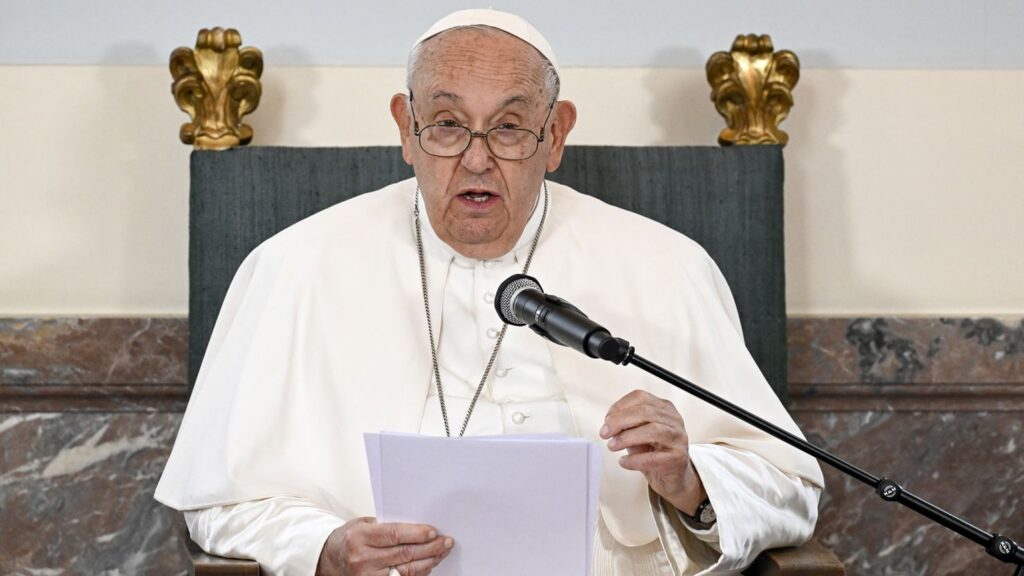

Pope Francis has renewed his commitment to eradicating sexual abuse within the Catholic Church following a stark and candid plea from Belgian Prime Minister Alexander De Croo during the Pope’s recent visit to Brussels. The Prime Minister’s direct appeal for action came during an unprecedented moment, highlighting the widespread concern about the Church’s handling of abuse cases, and urging the Vatican to confront the issue more decisively.
The Pope, who has been vocal about addressing abuse within the Church since the beginning of his papacy, responded to De Croo’s remarks by vowing to intensify efforts to root out what he referred to as the “scourge” of sexual abuse. The exchange has since garnered global attention, emphasizing the continued scrutiny the Catholic Church faces on this deeply sensitive issue.
The Belgian Prime Minister’s Unusually Frank Appeal
Prime Minister De Croo’s public appeal to Pope Francis during the Vatican leader’s official visit to Belgium was striking in its directness. In a speech before senior clergy and government officials, De Croo implored the Pope to take stronger action in tackling the crisis of sexual abuse within the Catholic Church, particularly in countries like Belgium, where cases have left deep scars on victims and society.
De Croo highlighted the “unbearable suffering” that survivors have endured and called for more than symbolic gestures from the Vatican, urging the Church to focus on “zero tolerance, accountability, and justice.” He expressed his hope that Pope Francis would lead the Church toward a future where such abuses are “not just condemned but eradicated.”
The Prime Minister’s remarks resonated with many who believe that the Church has not done enough to address abuse, despite measures taken in recent years. His call for “concrete actions” rather than apologies echoed the frustration of abuse survivors and advocates around the world, who have long demanded structural changes to prevent future abuses and to bring justice to those already affected.
Pope Francis’ Response: A Renewed Vow to Fight Abuse
In response to De Croo’s frank speech, Pope Francis acknowledged the gravity of the crisis and reaffirmed his commitment to addressing sexual abuse within the Church. “The pain and suffering caused by the scourge of abuse is something that the Church cannot and will not ignore,” the Pope said in a statement following the meeting. “We must intensify our efforts to ensure that no child, no vulnerable person, is ever again harmed under the Church’s care.”
The Pope’s response indicated his willingness to continue pushing for reforms that aim to hold clergy accountable for abuses. Since assuming the papacy in 2013, Francis has introduced measures aimed at strengthening the Church’s response to abuse, including creating Vatican tribunals to investigate bishops accused of covering up sexual abuse, expelling priests found guilty of abuse, and implementing more transparent reporting processes.
However, despite these efforts, critics argue that the Vatican’s response has been too slow and insufficiently widespread. In his speech, Pope Francis acknowledged the complexity of eradicating a problem that has been deeply entrenched for decades but stressed that progress, while gradual, is moving forward.
“We are committed to doing everything in our power to protect the vulnerable and to bring justice to the victims,” Pope Francis emphasized. “The Church must be a place of healing and reconciliation, not one of harm and betrayal.”
A Long Road to Accountability
The Catholic Church has been rocked by abuse scandals for decades, with cases surfacing in countries around the world. Belgium, in particular, has seen a series of high-profile cases of clerical sexual abuse, leading to widespread outrage and the subsequent resignation of prominent Church figures. Survivors have frequently criticized the Church for not doing enough to support victims or to hold perpetrators accountable.
Pope Francis’ papacy has been marked by attempts to address the legacy of abuse within the Church, but those efforts have often been met with resistance from within the Vatican and some local dioceses. The challenge lies not only in identifying and punishing abusers but also in dismantling institutional cultures of secrecy that have historically allowed abuse to continue unchecked.
In 2019, the Vatican held a historic summit on sexual abuse, during which the Pope declared “an all-out battle” against abuse. This summit was seen as a pivotal moment, laying the groundwork for increased vigilance and accountability within the Church. However, some victims’ groups argue that more drastic reforms are necessary, particularly when it comes to the handling of abuse allegations against bishops and higher-ranking officials.
The Global Significance of the Pope’s Promise
Pope Francis’ vow to root out the “scourge” of sexual abuse is especially significant given the public nature of the plea from a political leader like Belgian Prime Minister De Croo. It underscores the fact that the sexual abuse crisis is not only a religious issue but also one of broad social and political concern, affecting people and governments worldwide.
The Pope’s renewed promise comes at a time when trust in the Church has been deeply eroded in many parts of the world. Surveys show that faith in the Catholic Church, particularly in countries like Belgium, has plummeted as a result of the abuse scandals. As Pope Francis grapples with the challenge of restoring credibility to the institution, his latest statement is seen as a crucial step toward regaining that trust.
However, the true test will lie in how the Church follows through on its promises. Survivors and advocates have long called for the Vatican to take more decisive actions, including removing and punishing senior clerics who have been complicit in covering up abuse. As the Church moves forward with its commitment to addressing the crisis, the expectations for concrete outcomes have never been higher.
Conclusion
The Pope’s vow to root out sexual abuse in the Catholic Church, following a candid plea from Belgian Prime Minister Alexander De Croo, marks a significant moment in the ongoing fight for justice for abuse survivors. While Pope Francis has made strides in addressing this deeply ingrained issue, his response to De Croo’s call for more action serves as a reminder that the road to full accountability is far from over.
The world will now be watching to see if the Church can truly transform itself into an institution that not only condemns abuse but prevents it from happening and ensures justice for victims. In the words of Pope Francis, “The Church must be a safe haven for all,” and his vow in 2024 brings hope that this vision may one day become a reality.


